Quality matters when hiring for a big project. Call a Best Pick now!
Pest & Termite Control 
Keep Out! A Best Pick’s Most Effective Pest Control Methods
June 14th, 2012 byThis article was crafted with the help of Connor’s Termite & Pest Control.
Protecting your home from a pest infestation is a yearlong effort, but that doesn’t mean you have to be on guard 24/7. We spoke with Robin Mountjoy of Connor’s Termite & Pest Control about some of her most effective pest control advice.
Keep It Clean
One of the most effective ways to keep bugs and other pests out of your home is by simply keeping your home clean and in order, especially those dark, low-traffic areas like closets, crawl spaces, and attics.
If you store dry, pliable materials such as cardboard and old boxes, you should know that mice and rodents generally seek these types of materials to burrow in.
Robin says that keeping your home free of clutter is an integral step in defending your home from pests and adds that “reducing moisture and sealing entry points prevents many pest issues.”
Know Your Opponent
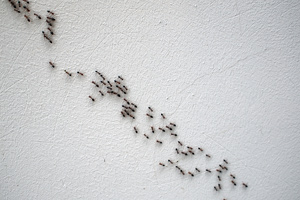
Effective pest control requires a continuous line of defense from all types of insects and rodents, and the type of irksome intruder can depend on the time of year.
Robin breaks it down for us: “Spring brings carpenter bees, while late summer brings bees and crickets. Fall brings crickets, mice, squirrels, and stink bugs, while winter brings mice and other invading pests seeking shelter from the cold.”
Two pests, in particular, are notorious year-round, though: ants are primarily the most common menace, and termites are the most destructive.
So how do you keep up with this frequently changing offense? Think like a pest. “All pests need three things: food, shelter, and water,” Robin says. “Some need more of one than the other, some prefer different food at different times of the year, but most pests need all three.
With this in mind, when the weather shifts, so do the needs of the pests.” Stay a step ahead of the game by updating pest prevention strategies as part of your seasonal home maintenance.
Pay Attention to Warning Signs
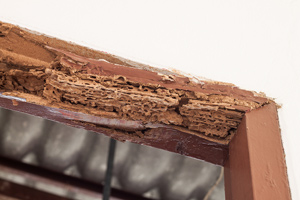
Damage caused by invading pests doesn’t manifest overnight or arrive with a loud racket. Sneaky bugs and rodents often leave telltale signs that they’ve invaded the premises.
Whether it’s a pile of wood dust or left-behind droppings, pests inadvertently let you know when they’re in or around the house. “Different pests leave different warning signs,” Robin says. She breaks a few down for us:
- Termites may leave mud tunnels, warping wood, or puckering drywall.
- Mice leave droppings and rub marks.
- Ants, crickets, and spiders are usually visible.
If you can’t tell the difference between an isolated issue and a serious problem, it’s best to bring in a professional.
When To Call Pest & Termite Control

Many homeowners think that a simple trip to the local hardware store and a stock of spray cans filled with insecticide will take care of a minor insect or rodent problem.
However, what might appear like a small family of pests could actually be a major issue for you and your home. Robin’s advice is to call a professional from the beginning.
“Many homeowners think they can save money by doing it themselves, but in the end, they have made the problem worse,” Robin explains. “Ask for a full inspection and tips on how to maintain your home and prevent such infestations.”
For termite infestations, in particular, homeowners should always have a termite protection contract. “Termites are not something homeowners can effectively treat on their own. Canned insecticides and other products tend to be contact killers and do not get to the source of the problem.
A professional knows the biology of the pest and can prescribe a unique treatment that will eliminate the issue.” Robin stresses the importance of calling a professional if there’s even a question of termite activity, and she reiterates that a home should always have a termite contract—no exceptions.
Treatment on a Pest-By-Pest Basis
When your home is host to unwelcome insects and rodents, no two solutions are alike. “You do not treat an ant infestation as you do a termite, cricket, or stink bug infestation,” Robin says. The severity of the infestation, type of infestation, and damage caused to your home are all taken into consideration by the pest control specialist.

While “there is no such thing as a typical service call in our business,” Robin outlines the routine measures a pest control technician should take in an initial visit:
“We will spend most of our time on the exterior of the home inspecting, excluding, and treating to prevent pests from entering the house. This will include several trips around a home while performing different tasks.
A Webster is used to knock down insect webs. Caulk and other products would be used to close entry points and treat cracks and crevices of windows and doors. A technician should do a full perimeter treatment of the exterior of a home.”
Three Keys to Success Against Pests
If you’re strategizing a pest prevention plan, Robin recommends three important things to keep in mind:
- Expert evaluations are essential. A professional company continually improves the technicians’ “toolbox” for alleviating and preventing pest infestations. This is completed through education, training, and efficient equipment.
- No two kinds of bugs are alike. Expect and investigate pest-specific solutions.
- Pest control service is only as good as the application and products that are used. The lowest price or the highest price does not determine the service; the testimony of a company is important. You can hire any Best Pick exterminator with peace of mind: we only list the best quality providers based on thorough customer research. Make sure you understand a company’s methods and process for extermination rather than deciding simply on price.
Tired of bugs and pests? Find a local Best Pick® pest & termite control company near you now.
This article was crafted with the help of Connor’s Termite & Pest Control, a Northern Virginia expert in Pest & Termite Control. While we strive to provide relevant information to all homeowners, some of the material we publish may not pertain to every area. Please contact your local Best Pick companies for any further area-specific advice.
Related posts
-

Everything You Didn’t Know You Wanted to Learn About Termites
-

Different Kinds of Termites and the Unseen Damage They Cause (Part 1 of 2)
-

Different Kinds of Termites and the Unseen Damage They Cause (Part 2 of 2)
-

These Parasites Are Hitching Rides on Your Pets
-

Cats: A Furry, Friendly Pest Control Option
-

Why Birds Should Be the Next Addition to Your Yard
-

How to Attract Birds to Your Outdoor Living Space
-

Don’t Invite Mosquitoes to Your Outdoor Party
-

What You Need to Know About Integrated Pest Management
-

How Bat Houses Can Protect Your Home from Mosquitoes
-

Infographic on How to Start a Vegetable Garden
-

Pest Control Inside and Outside: What’s the Difference?