
Best Appliance Repair Companies in San Francisco, CA
San Francisco, California

Best Appliance Repair Companies in San Francisco, CA

Find trusted appliance repair professionals serving San Francisco. All contractors are independently researched and certified.

Only companies with a Certified Best Pick® badge meet our strict satisfaction & licensing requirements and are eligible for the Best Pick Guarantee.

1
Recommended Pros
0+
Verified Reviews
Locally FocusedResearch-VerifiedFree Service

1 Contractors

Only companies with a Certified Best Pick® badge meet our strict satisfaction & licensing requirements and are eligible for the Best Pick Guarantee.

Certification Standards

How San Francisco Appliance Repair Companies Earn Best Pick Certification

Only appliance repair companies that meet our strict standards earn Best Pick status.

Customer Satisfaction

Appliance Repair companies must maintain a 4.0+ rating and an 80% recommendation rate.

Licensing & Insurance

Current state contractor license verification and general liability insurance for appliance repair work

Business Stability

Minimum 1 year in business with established local presence

Verified State Standing

Maintain active business registration and in good standing with the state

Operational Excellence

Consistent appliance repair service quality across all projects

Annual Re-Certification

Must re-qualify every year through new research

Frequently Asked Questions

Common questions about Certified Best Pick® appliance repair companies in San Francisco, CA

Best Pick Certified Appliance Repair companies in San Francisco, CA have earned their status through independent consumer research—not paid placement. To qualify, a company must meet strict standards:

  • High customer satisfaction: 4.0+ Google rating (25+ reviews) OR 80%+ recommendation rate from surveyed customers
  • Verified credentials: Active state licenses, general liability insurance, and workers' comp (where required)
  • Financial stability: Clean credit history and active Secretary of State standing
  • Local track record: Minimum 1 year serving the San Francisco, CA area

Certification is re-verified annually, ensuring continued performance.

No. Appliance Repair companies cannot buy Best Pick Certification, improved ratings, or better placement. Our research team independently evaluates companies based on customer satisfaction, licensing, insurance, and business stability—before any business relationship exists.

Companies that earn certification pay a participation fee after qualifying, which covers the cost of ongoing research and publication. This fee has no influence on whether a company qualifies or how they appear in our directory.

The Best Pick Guarantee provides financial protection—up to $2,500 in labor costs—if a Certified Best Pick Appliance Repair company fails to deliver on their commitments.

To be eligible:

  • Contact the company through Best Pick Reports or BestPickReports.com
  • Register for the guarantee (free)
  • Submit any claim within 45 days of the final date of service
  • Allow the company the opportunity to resolve the issue first

This guarantee applies only to Certified Best Pick companies, not Standard Pros. Full terms are available on our guarantee page.

Local appliance repair companies frequently handle unique failures driven by San Francisco weather, water chemistry, and historic building styles. Local service calls generally focus on three distinct environmental and structural drivers across the city:

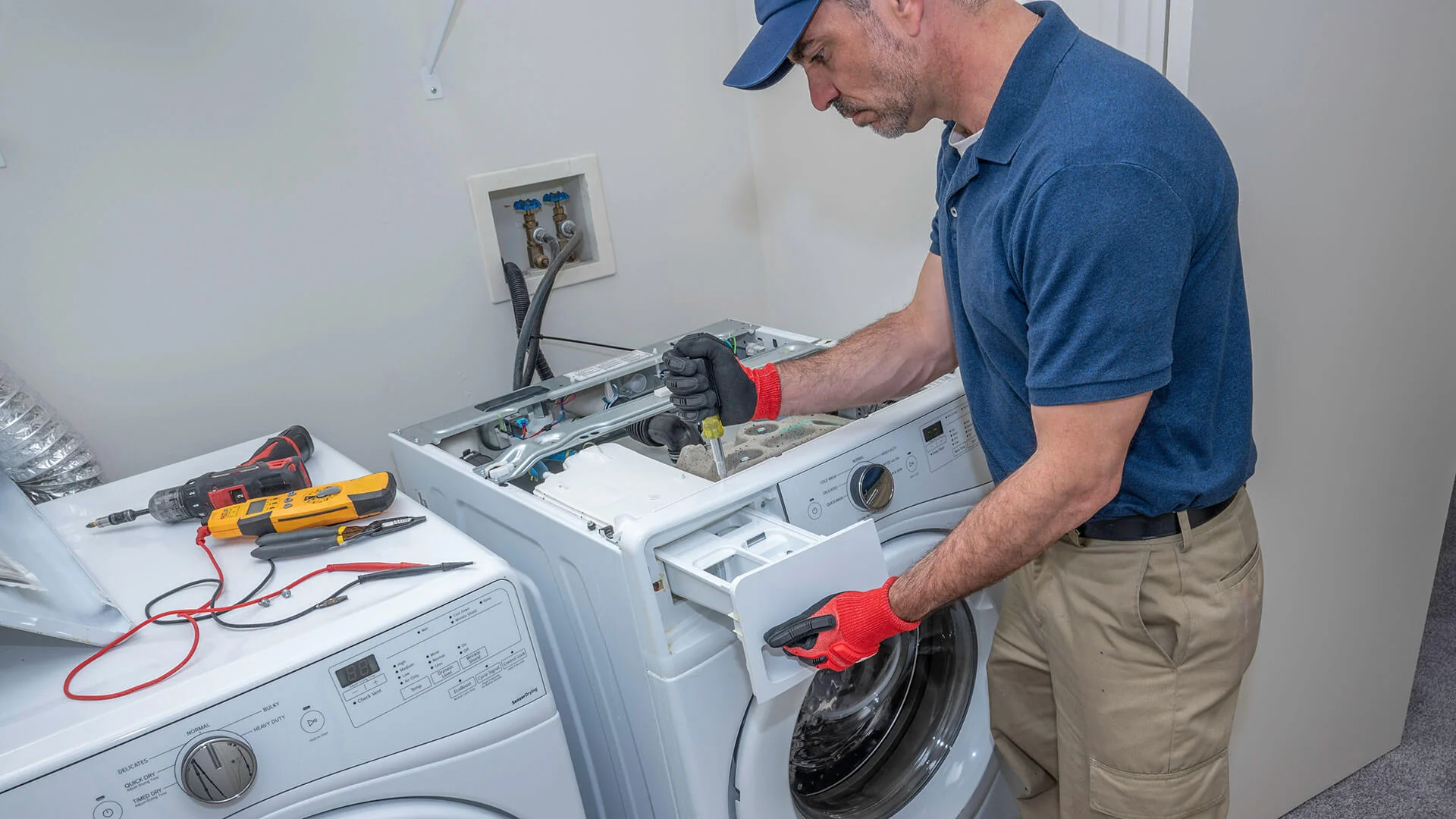
  • Persistent ocean fog keeps enclosed ground-floor laundry spaces damp. Front-loading washing machines frequently collect mildew along door gaskets. Proper ventilation helps slow dampness buildup in ground-level service areas. This requires deep cleaning or complete seal replacement by an experienced appliance service technician.
  • Tap water from the SFPUC Hetch Hetchy supply delivers soft water averaging 3.6 grains per gallon. Heavy mineral scale rarely damages heating elements or water valves. Service work centers on mechanical wear, drain pumps, and electronic control boards instead.
  • Roughly 65 percent of homes in classic neighborhoods like Pacific Heights and Noe Valley are historic Victorians or Edwardians with compact floor plans. Fitting or restoring major appliances in these tight spaces requires special care. For safety, gas range line work requires a C-36 plumbing license. Similarly, heavy 240-volt circuit conversions require a C-10 electrical contractor.

Ask for physical proof of two qualifications before letting anyone work in your home. The first is a valid EPA Section 608 certification for sealed cooling circuits. The second is active general liability insurance.

California requires state registration through the Bureau of Household Goods and Services, but that filing involves no technical exam. Gas appliance connections in San Francisco require a separate C-36 plumbing credential under Department of Building Inspection rules. That extra layer protects older Victorian and Edwardian properties against gas leaks.

Best Pick Reports makes the rest of the vetting simple. Each featured company passes a multi-step certification process built on independent customer surveys. Contractors must maintain a 4.0-star Google rating and clear annual re-verification of registration and insurance. Work completed by these vetted professionals carries the $2,500 Best Pick Guarantee.

  • Dark mildew builds rapidly along front-load washer door gaskets due to persistent marine fog in enclosed ground-floor laundry rooms. Homes across the Mission District and Haight-Ashbury receive soft water from the SFPUC Hetch Hetchy system, meaning mineral scale rarely damages internal heating elements. However, damp coastal air lingers inside unvented utility spaces, causing rubber seals to rot and produce sour odors.
  • Salt-laden aerosol steadily corrodes exposed coils on garage-level laundry pairs and second refrigerators inside raised-foundation Victorians around Russian Hill. San Francisco's 68°F average summer high keeps refrigeration running cool and extends total motor life. Instead of heat failure, local refrigeration units suffer from gradual mechanical wear and coastal cabinet corrosion over time.
  • Unresponsive digital displays, flashing error codes, or complete power loss frequently follow winter atmospheric river storms. Severe weather causes voltage fluctuations across older city power lines, which can instantly damage delicate electronic control boards inside modern cooking and laundry appliances.
  • Unusual grinding sounds, water pooling under washer bases, or inconsistent cooling cycles signal that key mechanical parts are wearing out. Reaching out to a local appliance technician allows you to address minor mechanical issues before they lead to severe structural leaks or full system breakdowns.

Reach out to a certified local specialist to schedule a complete performance inspection for your home appliances today.

  1. Vacuum refrigerator condenser coils. Dust and pet hair accumulate rapidly behind appliances in compact pre-war kitchens. Restricted airflow prevents proper heat rejection, forcing the cooling pump to run continuously and raise energy bills.
  2. Inspect front-loader door gaskets for dampness. Persistent marine fog and ambient coastal humidity trap moisture inside rubber door seals. Wiping away standing water prevents mold growth and stops foul odors from transferring to fresh laundry loads.
  3. Examine long dryer exhaust paths. Roughly 65 percent of San Francisco housing predates 1970. These raised-foundation Victorians and Edwardians typically place laundry appliances in garage-level spaces, creating extended vent runs that collect heavy lint and choke airflow.
  4. Check for simple drainage obstructions. Local tap water averages 3.6 grains per gallon from Hetch Hetchy snowmelt, which sits at the lower end of moderately hard water. Aggressive mineral descaling is rarely needed, so poor dishwasher performance usually stems from trapped food scraps.
  • Call a licensed specialist for critical utility boundaries: Homeowners should never attempt repairs on gas lines, high-voltage wiring, or sealed refrigerant tubing. Connecting fuel lines requires a licensed C-36 plumbing contractor. Servicing heavy 240-volt electrical circuits requires a C-10 electrical contractor under local permit rules. Furthermore, opening sealed refrigerant lines with A2L or R-600a flammable refrigerants legally mandates a technician with an EPA Section 608 certification. Consulting an experienced appliance repairman ensures these high-risk systems remain safe and fully compliant.